SaToA - Time Leap
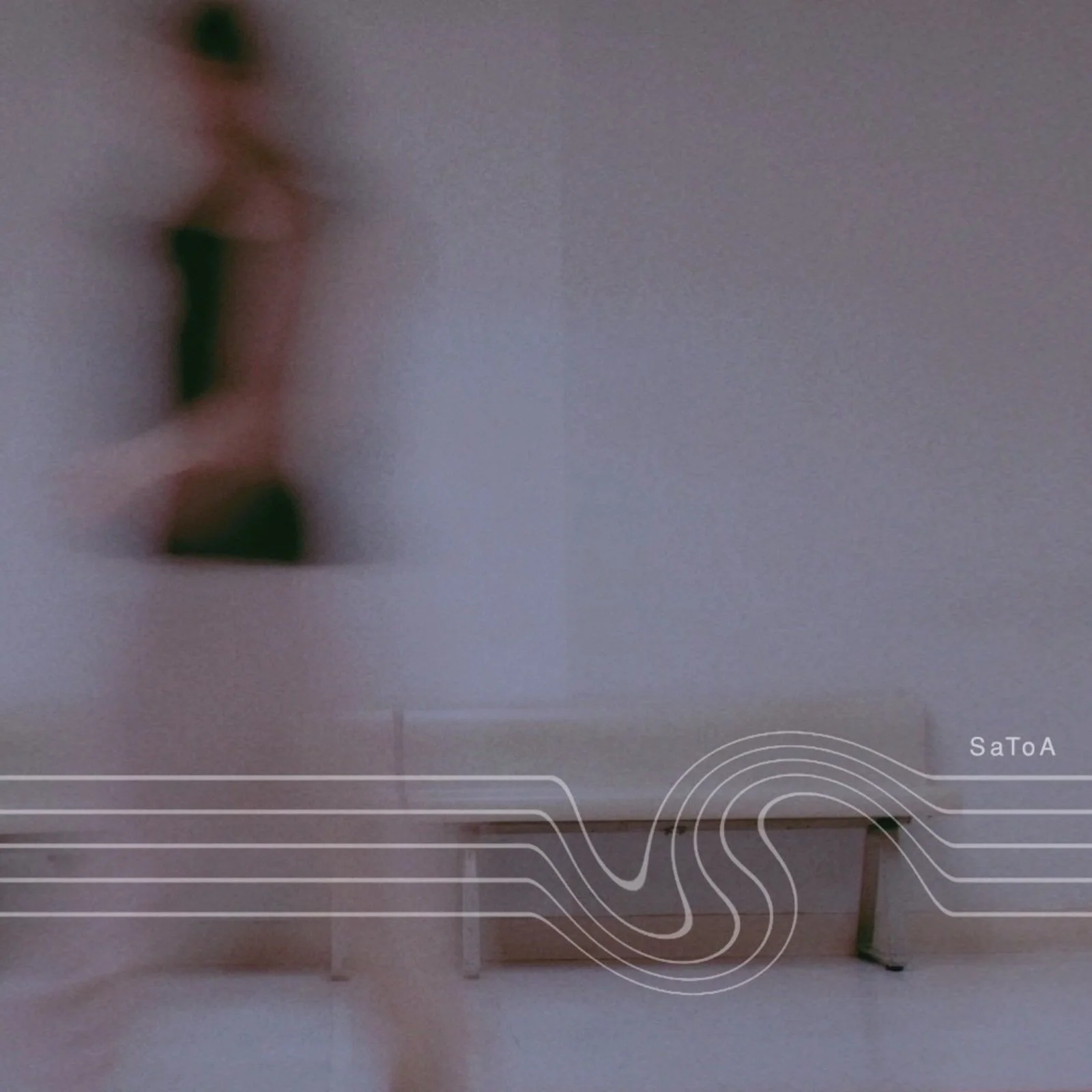
In the Japanese language, there is a personality characteristic derived from English called “my pace”. It is often used to describe people who literally go at their own pace, unbothered by what’s happening around them. It can be both a positive thing, that describes people who are independent and unhurried, but can also be a little self deprecating, because such people tend to do things slower than others.
As a band, SaToA is the very definition of “my pace”. Despite starting activities around 2015, “Time Leap” (タイムリープ) is the band’s long-awaited first full album released in 2025. Regardless of what has been happening in the world in terms of social or political trends, sisters Sachiko (guitar) and Tomoko (bass), and their friend Ami (drums) have continued to make music in their own way over these 10 years, still independent, still doing everything (writing, recording, mixing, mastering, cover art, marketing) by themselves.
However, this DIY approach is not strictly because they want to exercise creative control. It’s perhaps more a result of being introverted and shy, and unable to express exactly what they want to others, such as engineers, agents, or videographers. On the other hand, it is not that they do not know what they want, rather it's just hard for them to articulate.
You can’t blame them really. The SaToA sound is actually hard to describe and fit neatly into a specific genre or scene. Though they listen to a lot of different types of music, they aren’t a copy band, nor have they strategically chosen a specific lane like 70’s disco or 80’s synthpop. Indeed, sometimes the references for a song can be obvious, but even if you can argue that a SaToA track sounds a little like Shibuya-kei or folk, it’s just an organic development. At a recent fan event, the three members took turns to DJ and played a selection of their favourite sounds, ranging from city pop/AOR and jazz (Sachiko), 90’s/00’s R&B and J-pop (Tomoko), or Korean indie rock (Ami), interspersed with SaToA songs. And somehow, their sound fits right in with all of these genres without being a facsimile of any of them. The common elements among them are beautiful melodies, solid grooves, musicality, songwriting tradition, honest performances, and a little kitsch.
Their songs also come from their own world. They write about the things in their daily lives or things they might imagine, and don’t try to spread any particular messages to cheer you up or encourage you to follow your dreams. It’s not exactly world building, but Time Leap draws you into their universe, even beginning the album with a sample of a conversation between the members (apparently they’re just discussing what their favourite condiments are). They sing about their old cat Taro, wishing they could have gotten up earlier in the morning, rainbows, remembering the ramen they ate in winter and hot oolong tea. “Tough” was somehow inspired by a tree falling into the Amazon River, and “Shooting Star” was inspired by the members watching an idol audition series on Netflix. It’s somehow really personal without explicitly being so.
On the surface, this all sounds rather amateur, closer to an old-school garage band (do these even exist anymore?). What separates SaToA from rank amateurs is their commitment to the craft. Each song is rich in harmony and features intentional arrangement, and they continue to function without a nominal lead singer. Generally, they do not write songs in sessions together, apparently once the momentum or motivation is lost, it results in an awkward silence and nothing happens. Instead, they create demos on their own and workshop them together. This is where the magic happens. The original writer might request someone else to add lyrics or melodies, or other members freely contribute ideas. They spend a lot of time recording and re-recording, and changing the arrangement multiple times. “Time Leap” features no less than six re-arranged versions of previously released songs, not because they are lazy or can’t write, but because they are perfectionists (which is partly why it’s taken them ten years to make an album). There’s no arguing with the result though, the songs here are perfectly balanced, they evoke faint memories despite being in the moment, and express feelings of longing, joy, melancholy, and love, without resorting to extremes or cliches.
Although the title “Time Leap” was chosen coincidently because the members were interested in the topic around the same time, it turns out to be rather appropriate. SaToA’s “Time Leap” is an album that could have been made in any era, yet belongs to none, it is truly timeless and an instant classic. We may not get another album for another ten years, but we will certainly treasure this one.
Also by SaToA: Three Shot
Tokyo ON also recommends: 1983 - Passes on the Other Ocean, Julia Takada - Reverie