Black Boboi - Sepia
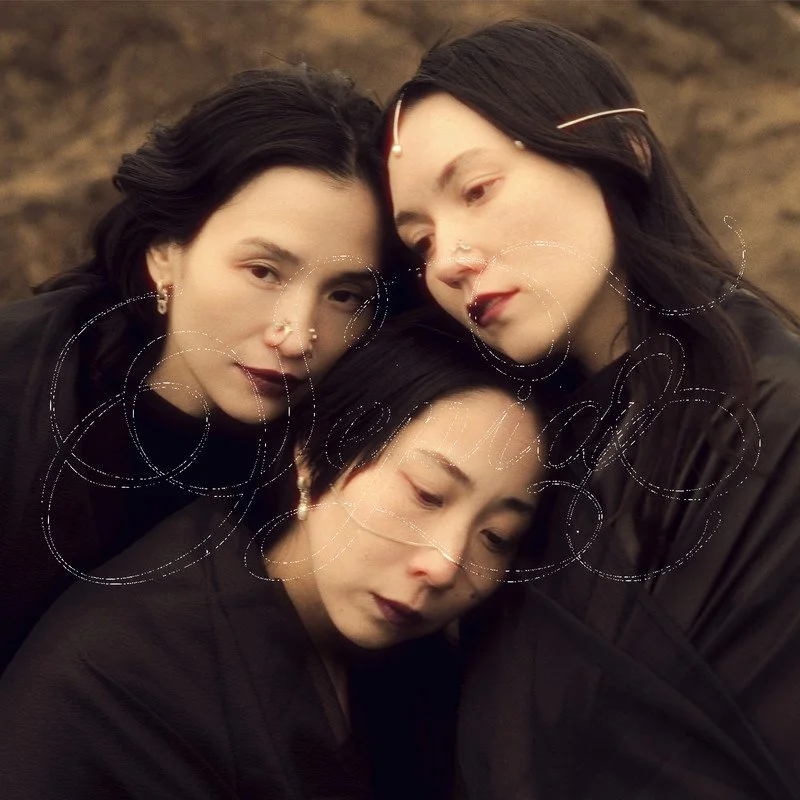
It’s been five years, but at last Black Boboi is back with a new album. Staying on brand as another variation of black and white, the theme and title of this album is Sepia, leveraging the supergroup’s signature cinematic style to creatively explore memories and dreams within a sci-fi scenario.
If you are familiar with the works of Black Boboi (the collective talent of Utena Kobayashi, Julia Shortreed, and ermhoi), then you know to expect melodies that soar and dive, epic choral voices, moody atmospheres, exotic instrumentation, and electronic beats with trip-hop and ambient flavours. The question then becomes how will it be applied this time? In the intervening years since their previous work Silk, we have seen the fracturing of social structures, increasing geopolitical conflict, and the rise of AI. Our memories are being increasingly outsourced to the internet, and power is becoming concentrated in a few individuals who have outsized influence on how we live our lives.
Against this backdrop, Sepia was originally conceived as a novel created by the three members via correspondence. The novel itself fell through, but the story forms the basis of Sepia. In the not too distant future perhaps, the Earth has been rendered practically uninhabitable. What is left of humanity has scattered, some living in a city on the seafloor, some searching for a new home in the greater solar system, and others surviving in what remains on land. The three groups update one another on their situations via letters, the only way to reliably preserve memories.
The album begins with “Letter”, and to set the tone, a snippet of a pleasant song plays in the background, evoking a memory of something like a busy cafe, only to be overridden by a droning sound that launches into the album proper. They vow to write letters to one another, “even if it’s not your birthday, and even if you’re not a novelist”. Opening with a sparse melody worthy of a sci-fi adventure, “Maelstrom” takes us into the ocean, diving in the cracks. There’s a sense of disorientation and confusion, being tossed around and dragged under by the currents. Are they dreaming, or is it real? (Maybe the whales know something). “Complete silence” comes from above, observing the struggle. Distance provides the perspective to analyze the situation, but physically prevents people from providing help. Meanwhile out in space, beyond the moon and out around Saturn, the travelers long to communicate their feelings to those left behind. The instrumental “Soil samples” appears to show us the situation on Earth. Without the business of life and voices, there remains a calm beauty, maybe something like a mysterious Japanese forest.
As part of the scenario, the humans are made to connect to a machine every night that a ruling organization controls. Any emotions or memories deemed harmful are erased and rewritten with thoughts that support the ruling organization. So whenever the humans wake, they are unsure whether the thoughts are their own. “When I fall asleep” describes this experience, and it’s emotionally painful because memories form the backbone of our close relationships, and if those memories are gone (or replaced), then those deep connections are severed, leaving us lost. The ruling organization makes its ominous presence felt on “List I made for you”, encouraging the users to engage more and decide what is best for them. The alternatives are restricted and suppressed, the choice already made. “Sepia” is the tale of the survivor on Earth, knowing this life will go on, they are determined to walk through the wavering storm, holding out hope for a happy ending yet. The album closes with the instrumental “Dear,” leaving you to perhaps reflect on the people in your own life and consider what you might say to them before something happens.
It seems abstract and somewhat cryptic, but if you connect all the emotions behind the songs, it’s easy to see parallels with our current situation. Our treasured memories paint a picture of happier times, when things weren’t quite so chaotic and hopeless. We hold onto them tightly, because making new connections in the digital wilderness has become so much harder, we face this paradox of being instantly connected to anyone around the world, but more distant and lonelier than ever. Meanwhile the algorithms control what we see, funneling us into preferred paths and often drawing us into conflict and despair. We’re not sure who or what to trust anymore, even our own eyes. The confusion, isolation, and disbelief make for unsettling dreams. Unfortunately, the struggle is not a dream, it is real.
Given that this is the reality we share in 2026, it makes it easy to identify with the worldview presented by Sepia. Sepia itself is the representative colour of memory and nostalgia, the tone of faded black and white photos from yesteryear. Memories stir up so many emotions in us, joy, melancholy, love, hope, and they connect us to one another. It’s telling that the cover art of Sepia actually shows us the faces of Black Boboi (instead of rocks or something abstract), with their bodies clustered together, as if they were holding on to one another. It’s perhaps a reflection of humanity, which has become more valuable than ever amongst the digital flood. So too with a work like Sepia, a powerful allegory of the human condition today, born from real experiences and emotions. AI could never.
Also by Black Boboi: Silk, Agate
Tokyo ON also recommends: Fuki Kitamura - Spira1oop, TAMTAM - Where They Dwell