Ryo Takaiwa - TAKAIWA
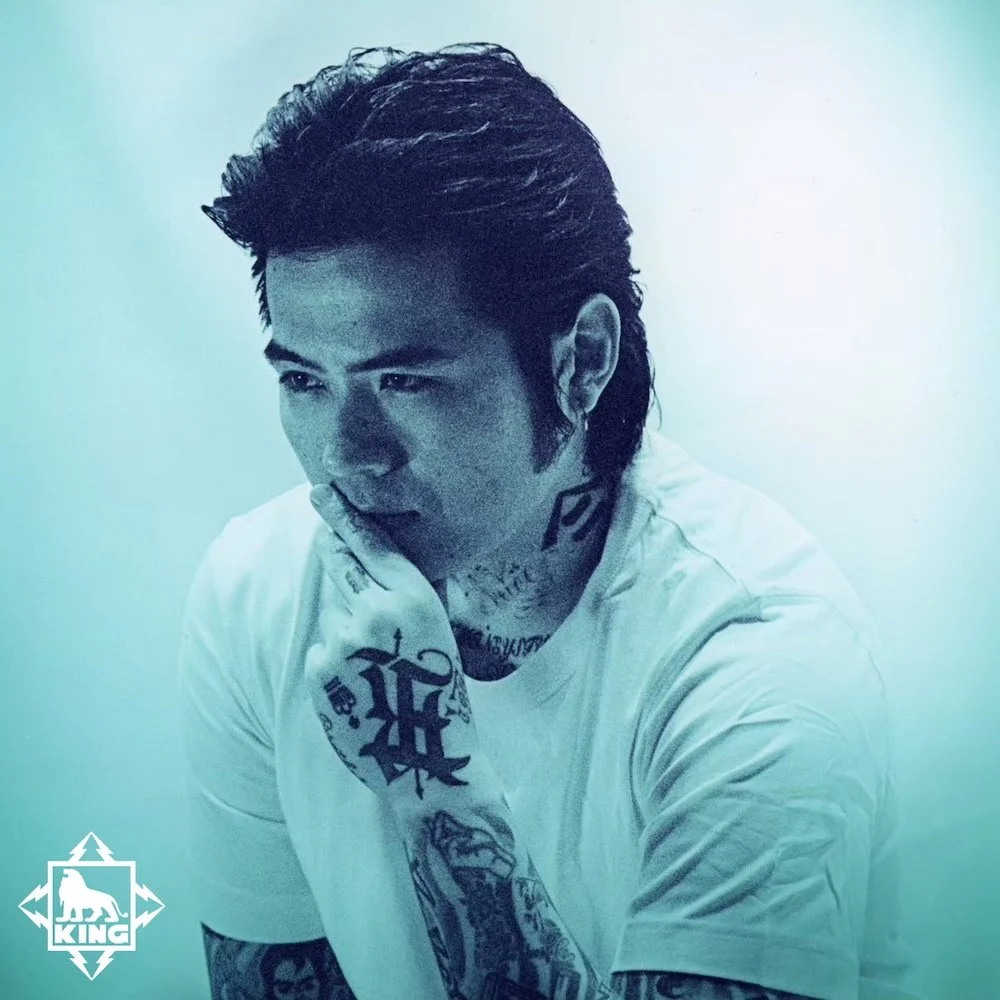
Seven years ago, Ryo Takaiwa was on top of the world. At age 28, he was lead vocalist of bands SANABAGUN and the Throttle, owner of a whiskey bar called Brother in Sangenjaya, and he had just released a big band album on a major label with wunderkind producer Yaffle. As the epitome of cool, you would find him driving the streets of Tokyo in his vintage Toyota Crown, tattooed hand on his Nardi steering wheel, smoking out the window, listening to Frank Sinatra. He boldly proclaimed that he would be a star, and we enthusiastically agreed with him at the time.
The follow up never came. In the intervening years, he worked on a couple of indie projects, including an entirely self-produced album (Mood Indigo) and an alternative rap album (Terror), which were interesting but completely underground. SANABAGUN went on hiatus, the Throttle disbanded, and he closed down his bar. Seeing age 35 as another milestone, he wanted to make another album, but he didn’t know what. The man was burned out. The swagger was gone.
So Takaiwa went back to his roots, moving back to his hometown Miyako, in Iwate Prefecture. A little countryside town of nothing, that he had once escaped in search of the bright lights of Tokyo. From that void came the first song, a blues song literally about nothing (“Nanimonai”). He’d lost everything, his bands, his bar, but here there were still fragments of his dreams. With nowhere else to go, he came back to jazz.
With jazz standards, it always comes down to the song selection. What to sing, what to play? Takaiwa was searching for songs that would represent him and his relationship with jazz, not songs to please others. As a student and practitioner, for Takaiwa jazz is both amazing and painful, cold and beautiful. It’s his blue sky, his source of energy and inspiration. As such, he decided to sing about his love of jazz. Going back to basics (and having already fulfilled his dream of making a big band album), he decided to perform as a jazz combo, enlisting his friends and collaborators Nobuo Watanabe (piano), Sho Tamaru (guitar), Takashi Tashiro (bass), and Daichi Hashizume (drums). Arranged like a session, the recording process for the whole album took just two days in Tokyo.
Continuing somewhat from where he left off, the first musical number is an introduction of the players titled “Blue in Heaven”, a riff on “My Blue Heaven” as the final track of “10”. The first actual song is “They Can’t Take That Away From Me”, which you usually interpret as a cute love song, but here it is Takaiwa reflecting on jazz as his core identity, that fascinates him just as the way someone holds their knife or sings off key, and these feelings can never be taken away from him. Expressing love in a different way, the band then tackles the love theme from Spartacus, and Takaiwa adds his own lyrics in Japanese. Having studied jazz in music college, Takaiwa is keenly aware that the roots of jazz lie in black culture, and that it has been imported into Japan. While Japanese musicians are often technically brilliant and able to imitate styles very well, it’s hard for them to be truly original, and Takaiwa focuses on making it his own wherever possible, be it through the arrangement or lyrics. Hence the choice to do “One For My Baby” on acoustic guitar. This time though, he’s proposing a toast to his whiskey bar and his bands that no longer exist. Along with the aforementioned track “Nanimonai”, the other original track on this album is “Rosita”, conceived after a visit to an old kissaten of the same name in Kyushu. It’s intended as a companion to “One For My Baby”, this time from the perspective of the store owner singing to the broken-hearted customer.
Returning to standards, “You Make Me Feel So Young” would have been a logical choice for his big band album as it’s a bright song often featuring cheeky, bombastic brass, but his version here is really intimate and subtle. Rather than being a declaration of love or an expression of joy, it’s more of a newfound acknowledgement of jazz as something that keeps him feeling young, like he’s singing to himself in the mirror. After all, jazz is something that you can do straight or you can innovate, whether you’re 28, 35, or even in your 80’s like Sinatra and Bennett.
As you might expect, the final track on this album is “My Way”, and it’s a loaded choice. Everyone’s had that experience of hearing someone mangle this at karaoke, usually an old man on an ego trip, trying to impress the people around him. Sinatra himself reportedly grew tired of it, and Takaiwa also understands that it can come across as self-indulgent and shallow. At the same time, there is a Japanese version that carries less baggage and has been performed honestly by greats like Akira Fuse and Kiyohiko Ozaki. Singing in his native language allows Takaiwa to give the song the emotion and respect that lies within, he is indeed reflecting on his life so far. The English version is included as a bonus, but also as an academic exercise. This allows him to attempt singing it without pretentiousness, just to show the contrast. The difference in the performance is subtle, but noticeable.
Although we once expected that Takaiwa would easily build a career as the face of a big band, perhaps things have turned out better this way. Time has a habit of humbling brash hotshots, but it also makes them wiser and more appreciative. His talent as arranger, singer, and piano player was never in question, but “TAKAIWA” reveals the vulnerable side of himself that we never saw behind the mask of cool, without descending into self-pity. Through his song choices and performances for this album, he makes the standards work for him, telling the story of his jazz life in his own way. This makes “TAKAIWA” a more than worthy follow-up to “10”, and one that was well worth waiting for. Hopefully we won’t have to wait as long for the next.
Also by Ryo Takaiwa: 10
Tokyo ON also recommends: SUKISHA - Art of Dazzling Swirl, S.A.R. - Verse of the Kool